
- Category
- Forb / Wildflower
- Sun
- Full to Shade
- Soil moisture
- Wet to Medium
- Bloom time
- Aug–Sep
- Bloom color
- Yellow
- Notes
- Aggressive, Rhizomatous
About Late Goldenrod
Late Goldenrod, also known as Giant Goldenrod, is a majestic powerhouse of the late-summer landscape. Reaching heights of 2 to 6 feet, this perennial features smooth, often purplish stems topped with dense, arching plumes of brilliant yellow flowers that bloom from August through October. Its lance-shaped leaves are sharply toothed, providing a lush backdrop to the golden inflorescences. Native across much of North America, it thrives in moist to wet soils, including prairies, marshes, and woodland edges, though it is remarkably adaptable to various garden settings. Late Goldenrod is a critical resource for pollinators, attracting a diverse array of bees, butterflies, and beneficial insects during a time when other nectar sources are scarce. It also provides essential cover for small wildlife. In the garden, it is best suited for larger naturalized areas where its vigorous, rhizomatous growth can be appreciated. It prefers full sun to light shade and is an excellent choice for stabilizing soil in wet areas or adding vertical interest to a meadow planting.
Native range
Native to 48 states:
County range map
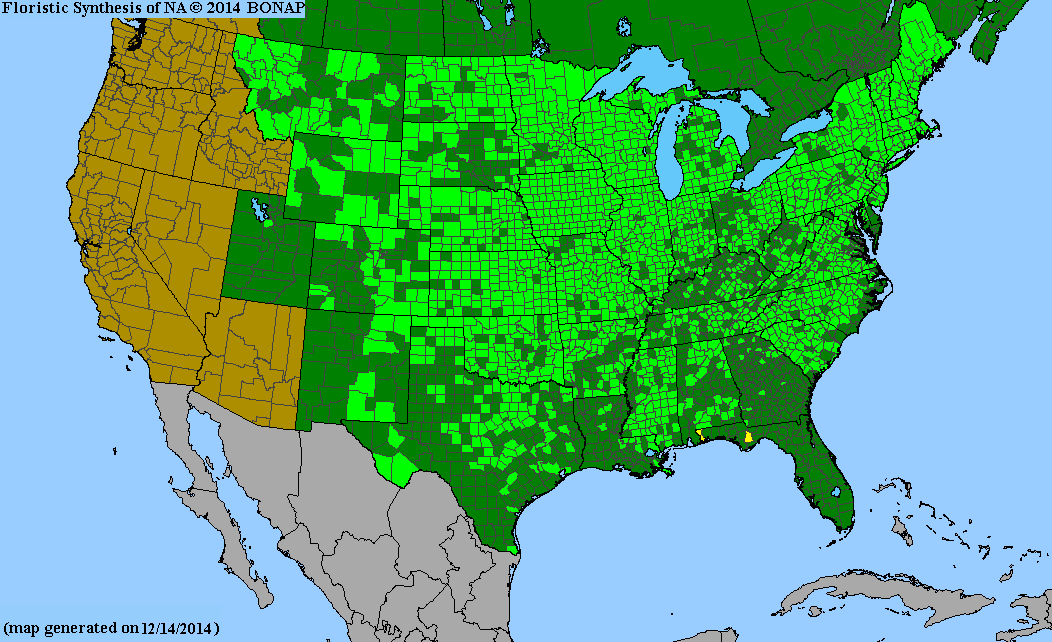
Range map courtesy of BONAP (Biota of North America Program).
Have more questions on Late Goldenrod?
the prairie farm FORUM
Want to grow Late Goldenrod?
Get a Quote