
- Category
- Forb / Wildflower
- Sun
- Partial to Shade
- Soil moisture
- Medium-Wet to Medium-Dry
- Bloom time
- Apr–Jun
- Bloom color
- Blue
- Notes
- Difficult from seed, Rhizomatous
About Wild Blue Phlox
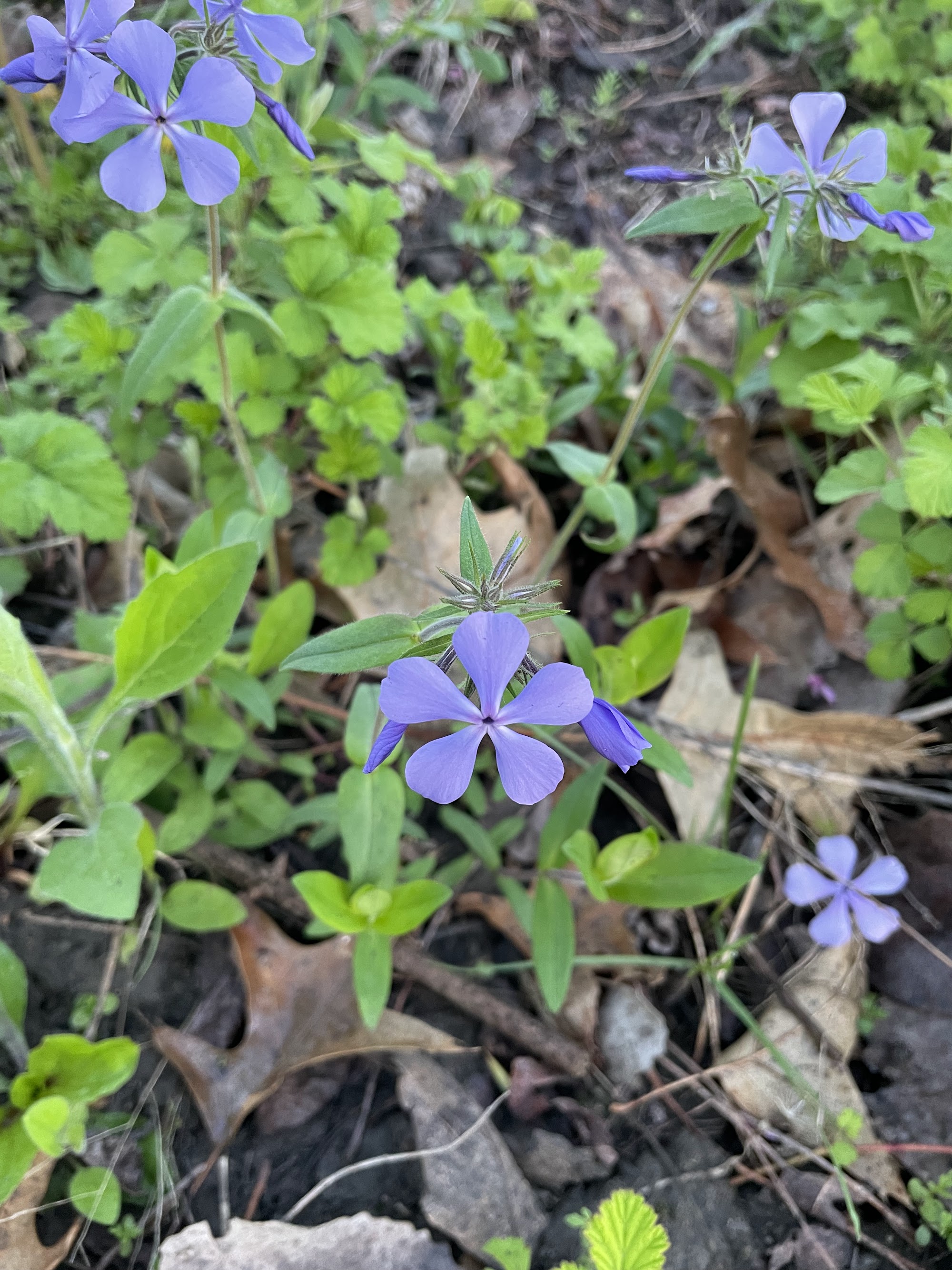
Wild Blue Phlox, also known as Woodland Phlox, is a beloved herald of spring that blankets the forest floor in a sea of soft blue and lavender. Blooming from April to June, its slightly fragrant, five-petaled flowers are a vital early-season nectar source for butterflies, including swallowtails, and long-tongued bees. The plant reaches 12 to 18 inches in height and spreads slowly via creeping rhizomes to form an attractive ground cover in shaded areas. Its opposite leaves and sticky, hairy stems help distinguish it from the invasive Dame's Rocket, which only has four petals. Native to rich, moist woodlands across eastern and central North America, it thrives in partial to full shade and medium-wet to medium-dry soils. While it is a favorite of rabbits, its stunning floral display and ability to naturalize in woodland settings make it a top choice for shade gardens. Growing it from seed requires patience and 60 days of cold stratification, but the reward of a fragrant, blue-tinted spring woodland is well worth the effort.
Native range
Native to 34 states:
County range map
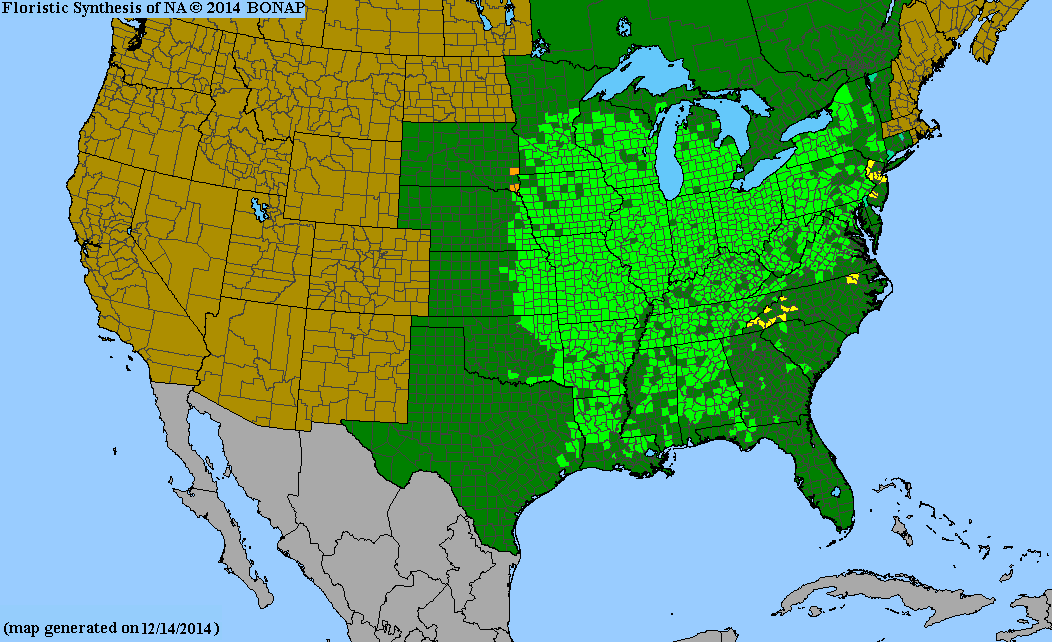
Range map courtesy of BONAP (Biota of North America Program).
Have more questions on Wild Blue Phlox?
the prairie farm FORUM
Want to grow Wild Blue Phlox?
Get a Quote