
- Category
- Grass / Sedge / Rush
- Sun
- Full to Shade
- Soil moisture
- Wet to Medium
- Bloom time
- May–Aug
- Notes
- Cool
About Common Bur Sedge
Common Bur Sedge, also known as Gray's Sedge, is a standout in any wetland or shade garden thanks to its striking, prehistoric-looking seed heads. These globoid clusters of perigynia span over an inch across and resemble medieval maces or three-dimensional stars, remaining attractive well into the winter months. Growing in slowly-spreading clumps, this perennial typically reaches heights of two to two and a half feet, though it can occasionally stretch to three and a half feet in ideal conditions. Native to the eastern half of North America, it thrives in floodplain forests, swamps, and wet woodlands where it can tolerate temporary flooding. Beyond its architectural appeal, Common Bur Sedge provides significant ecological value as a host plant for the Appalachian Brown butterfly and several specialized moths. Its nutrient-rich seeds are a vital food source for waterfowl, wild turkeys, and songbirds like the Swamp Sparrow. This versatile plant is an excellent choice for rain gardens, as it adapts to light conditions from full sun to medium shade, provided the soil remains wet to moist. For successful establishment from seed, a sixty-day period of cold, moist stratification is required.
Native range
Native to 1 states:
County range map
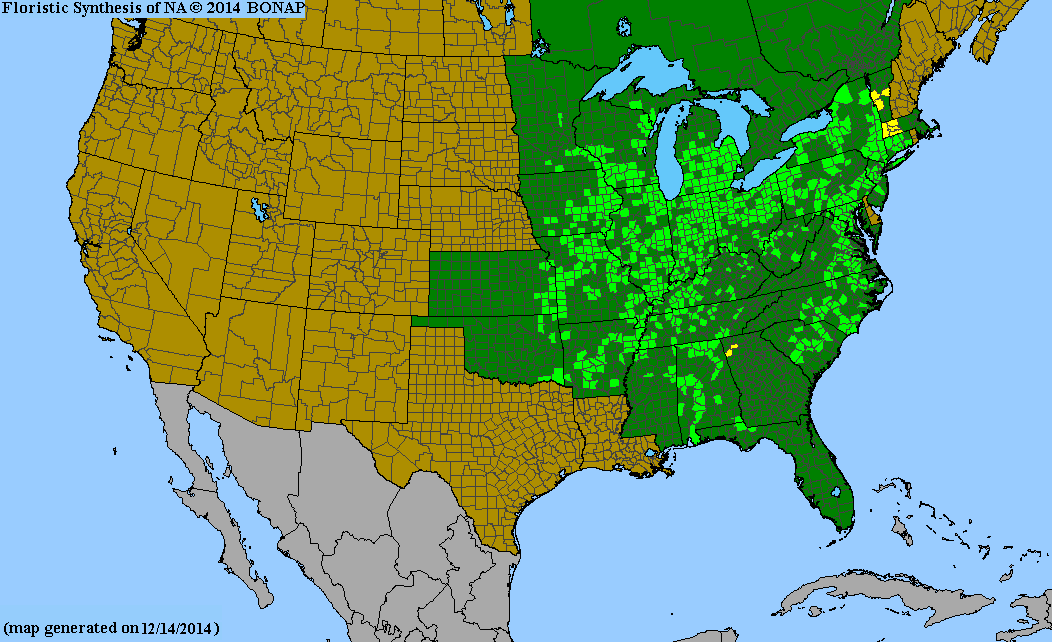
Range map courtesy of BONAP (Biota of North America Program).
Have more questions on Common Bur Sedge?
the prairie farm FORUM
Want to grow Common Bur Sedge?
Get a Quote